
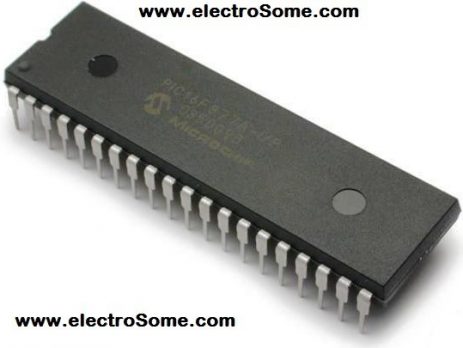
Expanding Output Pins of a PIC Microcontroller through Multiplexing

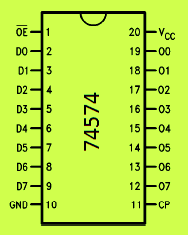
Imagine that you want to control 100 LED's with a PIC Microcontroller. No PIC Microcontroller with a DIP package having that many IO lines. This article explains two ways to expand output pins of a Microcontroller through multiplexing. Here we are using Time Division Multiplexing to expand output pins. The first method is by using D-Latch and second method is by using Serial in Parallel Out Shift register. In this tutorial we demonstrate the working by using 64 LEDs. Using D Flip-Flop and Decoder 74574...
What’s Inside an Electrolytic Capacitor?

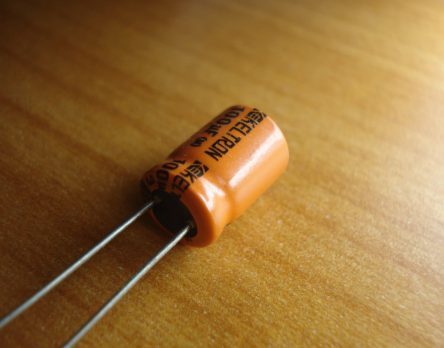
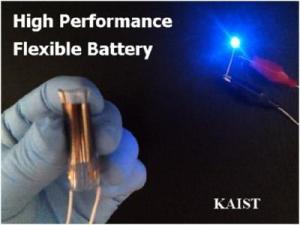
The aluminium electrolytic capacitor consists of two foils sandwiched between absorbent paper, and wound tightly into a cylinder. The anode, is composed of pure aluminium foil with aluminium oxide formed electrolytically on the surface. The foil has been etched to increase the effective surface area. The cathode is made of high-absorption paper mixed with an electrolyte, in contact with a cathode foil. The electrolyte is used to ensure good contact with the anode, by permeating its etched structure, and also to repair any flaws in the oxide layer when the capacitor is polarised....

PIC to PIC Communication using UART

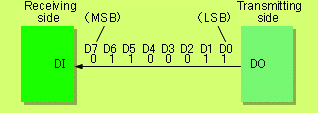
Introduction PIC to PIC communication will be needed in some embedded applications. We have two options to transmit data through transmission lines. Parallel Transmission Serial Transmission Parallel Transmission Parallel Data Transmission In parallel communication an entire byte of data is transmitted at a time. That is each bit has dedicated line. Thus for 8-bit data transfer we need 8 dedicated lines as shown above. Serial Transmission Serial Data Transmission In Serial Transmission only one bit of a byte is transmitted at a time. There is only one communication line,...

Using Interrupt with PIC Microcontroller

Introduction Interrupt is the one of the most powerful feature in embedded applications. Almost all the real time applications are implemented using Interrupts. So what is an Interrupt...?? As the name suggests Interrupts are special events that requires immediate attention, it stops a microcontroller/microprocessor from the running task and to serve a special task known as Interrupt Service Routine (ISR) or Interrupt Handler. Suppose you are at home, taking coffee. Suddenly your mobile phone rings. You stop taking coffee and answer the call. When you have...

Using Analog Comparator in PIC Microcontroller

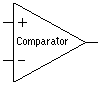
Comparator Module in PIC Analog Comparator is a device which compares two voltage signals and switches its output to indicate which one is larger. The analog comparator is used in many applications such as battery charger, analog to digital converters, IR sensors where we need to compare two signals. Most of the PIC Microcontrollers have built in Comparator Module which makes ease of design and saves cost. For demonstration, we use PIC16F877A. PIC16F877A consists of two analog comparators which can be used in eight different...

Nanowire 3D Transistors Becomes More Compact

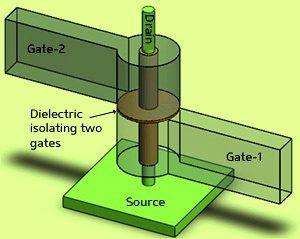
A transistor is a very important electronic device which is used to amplify and switch electronic signals. Semiconductor Chip makers started to use 3D Transistors in 2011 to reduce the size and increase the efficiency of chips. They can pack more 3D transistors into a single chip since it is much more compact than traditional planar transistor. The amount of compactness will not be sufficient for future generations of semiconductor chips and to keep the pace of Moore's Law. Thus there is a...

Interfacing EEPROM with PIC Microcontroller

What is an EEPROM ? EEPROM is an abbreviation for Electrically Erasable  Programmable Read Only Memory and it is a Non-Volatile memory. It is used in computers and other electronic devices to store data that must me saved during no power supply. EEPROM is a class of ROM (Read Only Memory) which can be electrically erased in bit by bit and able to store new data. A small amount of EEPROM (usually 128/256 bytes) is available internally with PIC Microcontrollers. I have already posted about Using...

>